



Christodoulides: We Are Ready to Start Negotiations Even Tomorrow
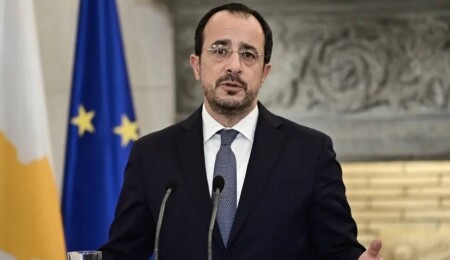
Greek Cypriot leader Nikos Christodoulides made extensive remarks on the Cyprus issue and foreign policy in a wide-ranging interview published yesterday in the Greek Cypriot press.
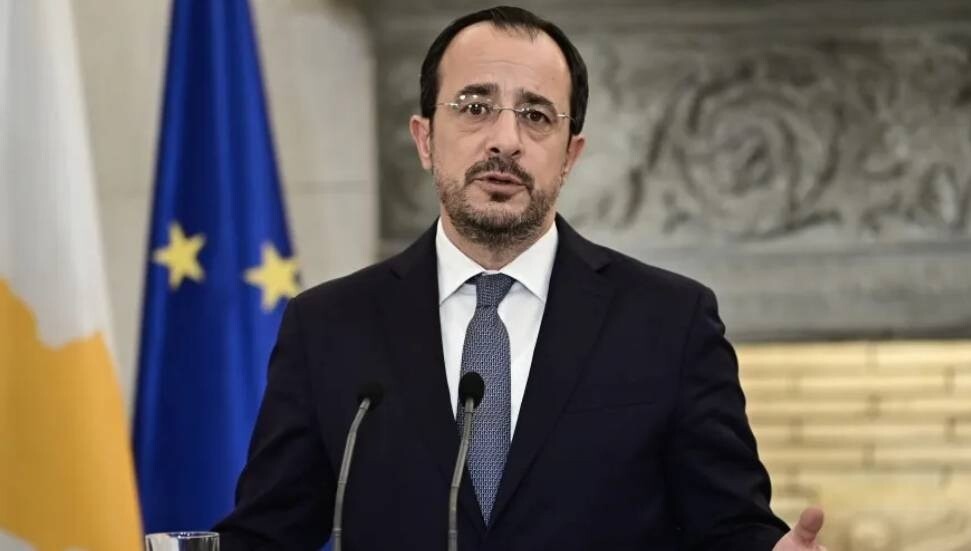


The newspaper featured the interview under headlines including “A Strong Cyprus at Home and Abroad – Synergies Delivering Tangible Benefits for the Public – Four Ministers to Visit the United Arab Emirates Soon for Water and Energy Agreements – Growing Interest in the Substance of a Cyprus Settlement.”
According to the report, Christodoulides said his administration is building a strategy aimed at promoting Southern Cyprus internationally while strengthening its capacity to address domestic challenges.
Referring to increased regional activity, Christodoulides underlined Southern Cyprus’s role in the region, arguing that its geostrategic position could translate into tangible benefits that improve citizens’ daily lives and living standards.
Responding to a question, Christodoulides said every foreign policy move is directly linked to domestic policy. He noted that agreements recently concluded with the United Arab Emirates, France and Israel, as well as future agreements planned from 2026 onwards, are intended to deliver concrete results.
He said the overarching objective is to enhance all elements of the country’s internal and external strength in order to overcome challenges and achieve strategic goals. On the domestic front, he also referred to steps aimed at improving everyday life and significantly raising living standards.
Christodoulides said one tangible outcome they are pleased to see is the European Union recognising the strategic importance of the Middle East. In this context, he highlighted that European Commission President Ursula von der Leyen, who will visit Southern Cyprus on 7 January for the opening of the EU Council Presidency, is also expected to visit Syria, Jordan and Lebanon.
He said the EU now understands the region’s importance, meaning and role, adding that the region also serves as a point of convergence with the United States, which has shown interest in broader cooperation perspectives.
This interest, he said, could be expressed through the implementation of strategically significant projects such as the India–Middle East–Europe Economic Corridor (IMEC). He also referred to Indian Prime Minister Narendra Modi’s recent visit to Southern Cyprus, the first in 20 years.
Stressing that nothing is coincidental, Christodoulides said all actions serve a specific purpose and are based on a comprehensive strategy. He added that discussions during his visit to Israel included how to operationalise the IMEC corridor, as well as extensive talks on the Great Sea Interconnector (GSI) project, which he said should proceed without delay.
He also referred to a recent decision involving the Lebanese government, noting that Southern Cyprus has applied to the World Bank for an electricity interconnection with Lebanon. Participation in IMEC, he said, could both enhance the country’s international role and help address domestic challenges such as reducing electricity prices.
Christodoulides said relations with the United Arab Emirates have been upgraded strategically, with cooperation focusing on resolving water and energy issues. He noted that an agreement with the UAE is planned for early 2026 and that a group of ministers from Southern Cyprus will soon travel to the UAE to institutionalise cooperation in these fields.
On energy, Christodoulides said they are seeking a comprehensive agreement for the participation of UAE companies in the energy sector, including within the unilaterally declared Greek Cypriot exclusive economic zone. He said water and energy will form the core of cooperation with the UAE.
He added that the electricity interconnection project with Greece is considered strategically important and that close contact with the Greek government is ongoing.
Asked about defence cooperation with Israel, Christodoulides said it primarily involves joint military exercises, creating synergies between defence industries in Southern Cyprus, Israel and possibly Greece, access to European funds and the creation of new jobs. He added that defence cooperation also includes the acquisition of military equipment to strengthen deterrence, which he described as a top priority.
US involvement in the Cyprus issue
Asked whether there are indications of American involvement in the Cyprus issue, Christodoulides said there is no such indication and that the United States has not even hinted at intervention. He said discussions with the US take place within a broader framework concerning the region and Southern Cyprus’s role as a predictable and reliable partner.
He stressed that approaching the Cyprus issue as a regional matter, rather than a bilateral dispute between Greek Cypriots and Turkish Cypriots or Turkey, increases the chances of success.
Commenting on references to UN resolutions in joint statements, Christodoulides said such references automatically define the form of a settlement and that these resolutions cannot be approached selectively. He dismissed speculation about an informal timetable linked to UN Secretary-General António Guterres’s term, saying timetables have been tried and failed.
He said Guterres’s presence is helpful, given his understanding of how the EU functions, but added that if political will exists, a settlement could be reached even before Guterres leaves office. “Everything depends on political will and preparation, and we are fully prepared,” he said.
Asked whether recent initiatives could change Turkey’s stance, Christodoulides said they do not act based on Turkey’s behaviour and do not view developments as a zero-sum game. He said the message to Turkey is that the Republic of Cyprus is not alone and is part of cooperation frameworks that enhance security.
He said he does not feel pressure domestically over the Cyprus issue, adding that if the issue were resolved, Turkey would not be excluded from regional cooperation. He claimed Turkey excludes itself due to its broader stance, while Southern Cyprus taking initiatives remains important.
Christodoulides maintained that all actions ultimately serve the overarching goal of resolving the Cyprus issue. He reiterated that they are ready to start negotiations even tomorrow.
Responding to criticism by Turkish Cypriot leader Tufan Erhürman that Southern Cyprus seeks to bypass him and speak directly to Turkish President Recep Tayyip Erdoğan, Christodoulides said he disagrees. He said Southern Cyprus speaks with everyone, informally or through third parties, as an internationally recognised EU member state.
Asked whether Erhürman’s election marked a change, Christodoulides said Erhürman is clearly different from Ersin Tatar. He said everyone will ultimately be judged at the negotiating table, adding that the focus should now shift from confidence-building measures to the substance of the issue.
On political equality, Christodoulides said they have never objected to it, arguing that objections arose only when it was interpreted as sovereign equality. He said political equality, as recorded in UN resolutions, has never been opposed by the Greek Cypriot side.
He said governance is one of six core chapters of the Cyprus issue and that all must be addressed as a whole through negotiations. He expressed hope that talks would resume as soon as possible, adding that Greek Cypriots attach importance to guarantees and security, while Turkish Cypriots prioritise governance, but none are set as preconditions.
Christodoulides said he is ready to resume negotiations from where they left off at Crans-Montana. He confirmed that no date has yet been set for a multilateral meeting.


Diğer CYPRUS MIRROR Haberleri


Yorumlar
Dikkat!
Suç teşkil edecek, yasadışı, tehditkar, rahatsız edici, hakaret ve küfür içeren, aşağılayıcı, küçük düşürücü, kaba, müstehcen, ahlaka aykırı, kişilik haklarına zarar verici ya da benzeri niteliklerde içeriklerden doğan her türlü mali, hukuki, cezai, idari sorumluluk içeriği gönderen Üye/Üyeler’e aittir.