



Erhurman: Those Responsible for Deadlock Must Pay a Price
President Tufan Erhurman has stated that no negotiations can begin without guarantees of political equality and warned that if talks collapse once again, there must be consequences for those responsible for failure.
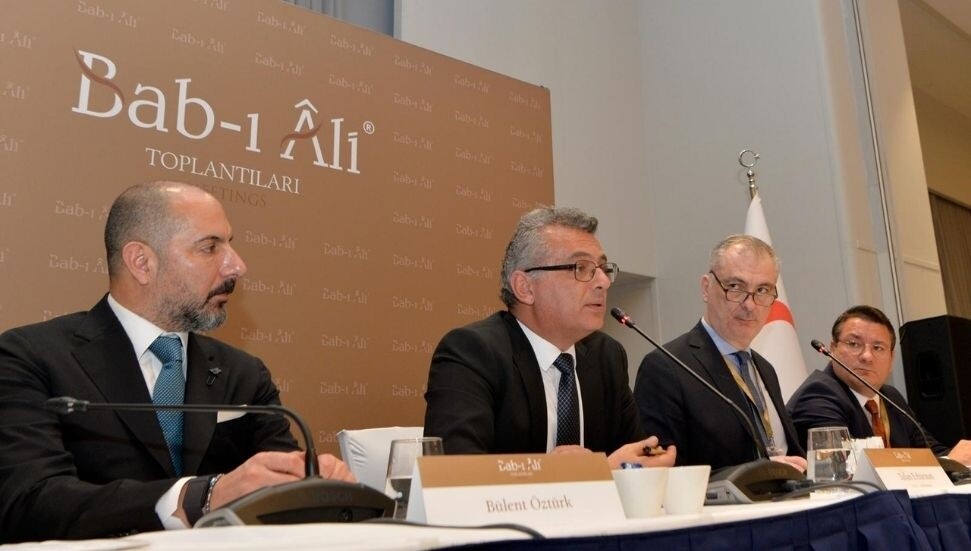


Speaking as the guest of honour at the 35th Bab-ı Âli Meetings in Istanbul, held under the title “The Cyprus Problem in Light of Regional Developments,” Erhurman said a return to the status quo would not be acceptable. “If the table is abandoned again, there must be a price to be paid by whoever causes the deadlock,” he said.
The event, hosted at the Maslak Hilton Hotel, was attended by former ministers and senior bureaucrats, ambassadors, journalists and figures from political circles. Erhurman became the second President of the Turkish Republic of Northern Cyprus to address the Bab-ı Âli platform after founding President Rauf Raif Denktaş.
At the beginning of his speech, Erhurman underlined the Turkish Cypriot people’s will for a settlement and stressed that their rights go far beyond existing state institutions such as the legislature, executive and judiciary.
He said Turkish Cypriots hold legal rights over the entire island in six key areas: security, energy, maritime jurisdiction zones, hydrocarbons, international trade routes and European Union citizenship. While Turkish Cypriots are equal founding partners with shared sovereignty rights under international law, Erhurman noted that this equality has not been reflected in practice.
He criticized the Greek Cypriot leadership for signing agreements on security, energy and hydrocarbons with countries such as Israel, the United States, France and India without regard for Turkish Cypriot rights. Referring to the 1960 arrangements, Erhurman recalled that Vice President Dr Fazıl Küçük once held veto authority on security matters, highlighting how far the situation has shifted.
Erhurman said agreements signed between Israel, Greece and South Cyprus would normally have required Turkish Cypriot consent under the 1960 framework, but that today Turkish Cypriots are excluded from decision-making while being forced to share the risks.
GSI Project and Regional Risks
Erhurman also addressed the EU-backed Great Sea Interconnector (GSI) project linking Israel, Greece and South Cyprus via an undersea energy cable. He said even Greek Cypriots questioned the project’s economic viability and argued that the most feasible route would be Cyprus–Turkey–Greece, given geographical and technical conditions.
He criticized the European Union for calling for a settlement in Cyprus while simultaneously supporting projects that exclude both Turkish Cypriots and Turkey. “Our aim is to transfer to future generations the authority and rights entrusted to us by those who fought the struggle for existence on this island,” he said.
He warned that agreements signed by the Greek Cypriot leadership risk dragging the whole island into regional conflicts. Referring to recent tensions between Israel and Iran, Erhurman noted that for the first time since 1974 Turkish Cypriots had begun discussing shelters again. “Cyprus is a small place. If a missile comes from Iran, no one knows where it will land,” he said, pointing to the use of Paphos Air Base in South Cyprus.
Four-Point Methodology
Erhurman outlined a four-point methodology for any future talks:
-
Political equality must be guaranteed before negotiations begin.
“No Turkish Cypriot would sign an agreement that turns them into a minority,” he said. -
Previous convergences up to Crans Montana remain valid.
Restarting talks from zero would be unacceptable. -
Negotiations must be time-bound.
Any new process must include a clear timetable. -
There must be a cost for walking away from the table.
“If the table is abandoned again, Turkish Cypriots will not return to today’s status quo,” he said.
He stressed that unless agreement is reached on these procedural rules, sitting at a negotiation table would be meaningless. Current contacts with the Greek Cypriot side, he added, are limited to confidence-building measures rather than formal negotiations.
International Context
Erhurman said the methodology was largely drawn from statements made by UN Secretary-General Antonio Guterres and recalled former UN Secretary-General Kofi Annan’s 2004 report following the Annan Plan referendum, which called for ending the isolation of Turkish Cypriots. Despite this, he noted, Turkish Cypriots still face restrictions on direct flights and trade, as well as obstacles in sports, arts and academia.
He argued that the Greek Cypriot side enjoys international recognition, EU membership and direct access to global markets, while Turkish Cypriots are forced to compete in tourism, trade and higher education under unequal conditions. This, he said, creates a comfort zone that weakens incentives for compromise.
“Mere negotiations for the appearance of talks do not lead to a solution and only waste time,” Erhurman said. “There must be a price for those who cause non-solution. We are not seeking to punish the other side, but we will not return to a status quo without direct trade, direct flights and direct contact.”
Guarantee System and Turkish Cypriot Rights
Erhurman emphasized that Cyprus has three guarantor states and two equal founding partners, and said recent initiatives by the Greek Cypriot side violate Turkey’s guarantor rights and ignore Turkish Cypriots. He added that this position has been conveyed to the United Nations.
He underlined the importance of explaining the Turkish Cypriot position to the international community, including through platforms such as the Organisation of Islamic Cooperation and the Organization of Turkic States, where Northern Cyprus holds observer status.
“Our duty to future generations is to speak not only at the negotiation table but also to the world beyond it,” he said.
Concluding his speech, Erhurman said the Turkish Cypriot people have not yet achieved what they deserve despite decades of struggle. “We exist today as we did under the hardest conditions, and we will continue to exist as equals,” he said.


Diğer CYPRUS MIRROR Haberleri


Yorumlar
Dikkat!
Suç teşkil edecek, yasadışı, tehditkar, rahatsız edici, hakaret ve küfür içeren, aşağılayıcı, küçük düşürücü, kaba, müstehcen, ahlaka aykırı, kişilik haklarına zarar verici ya da benzeri niteliklerde içeriklerden doğan her türlü mali, hukuki, cezai, idari sorumluluk içeriği gönderen Üye/Üyeler’e aittir.