



Turkey Probes Wreckage of Plane Crash as Libya Mourns Army Chief
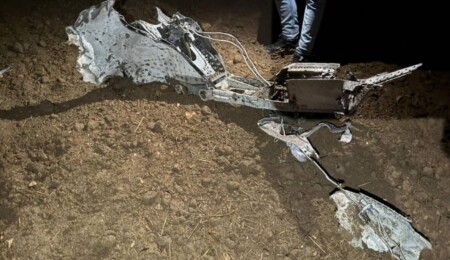
Search teams on Dec. 24 recovered the cockpit voice and flight data recorders from the jet that crashed and killed Libya’s military chief and other senior officers, while efforts to retrieve the victim's remains were still underway.
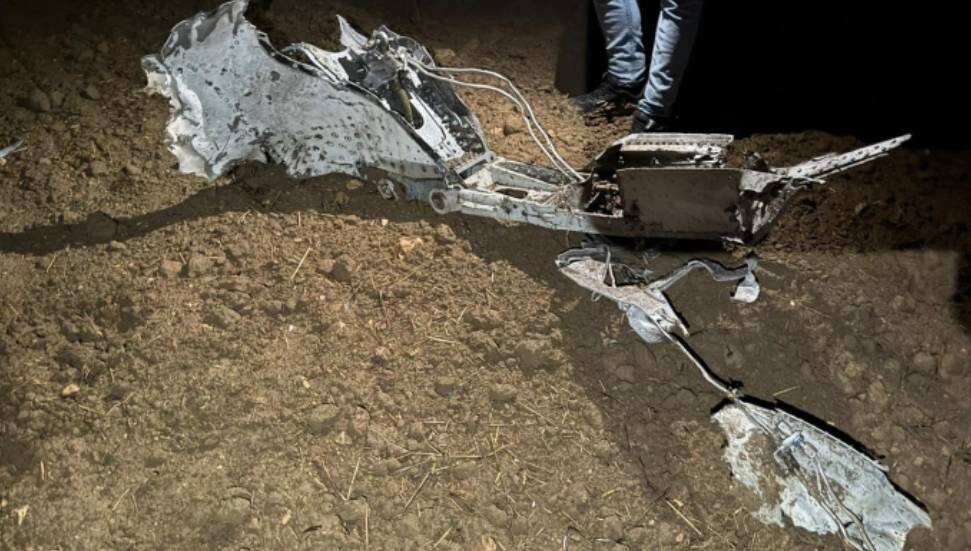


The private jet carrying Gen. Muhammad Ali Ahmad al-Haddad, four other officers and three crew members crashed in Turkey on Dec. 23 after taking off from the capital, Ankara, killing everyone on board. Libyan officials said the cause of the crash was a technical malfunction on the plane.
The private jet carried Gen. Muhammad Ali Ahmad al-Haddad, four other officers and three crew.
The high-level Libyan delegation was on its way back to Tripoli after holding defense talks in Ankara aimed at boosting military cooperation between the two countries.
Turkish Interior Minister Ali Yerlikaya told journalists at the site of the crash that wreckage was scattered across an area covering three square kilometers (about 1.2 square miles), complicating recovery efforts.
Voice recorder and the flight data recorder (black box) were recovered from the plane, Yerlikaya announced.
Authorities from the Turkish forensic medicine authority were working to recover and identify the remains, he said.
A 22-person delegation — including five family members — arrived from Libya early on Dec. 24 to assist in the investigation, he said.
Turkish officials said the Falcon 50-type business jet took off from Ankara’s Esenboğa Airport at 8:30 p.m. and that contact was lost some 40 minutes later.
The plane notified air traffic control of an electrical fault and requested an emergency landing. The aircraft was redirected back to Esenboğa, where preparations for its landing began.
The plane, however, disappeared from the radar while descending for the emergency landing, the Turkish presidential communications office said.
The wreckage was found near the village of Kesikkavak, in Haymana, a district some 70 kilometers (about 45 miles) south of Ankara.
At the crash site, search and recovery teams intensified their operations on Dec. 24 after a night of heavy rain and fog.
Gendarmerie police sealed off the area while the Turkish disaster management agency, AFAD, set up a mobile coordination center. Specialized vehicles, such as tracked ambulances, were deployed because of the muddy terrain.
Turkey has assigned four prosecutors to lead the investigation and Yerlikaya said the Turkish search and recovery teams numbered 408 personnel.
Libya declared three days of national mourning. Al-Hadad was the top military commander in western Libya and played a crucial role in the ongoing, U.N.-brokered efforts to unify Libya’s military, which has split, much like Libya’s other institutions.
The four other officers who died in the crash were Gen. Al-Fitouri Ghraibil, the head of Libya’s ground forces, Brig. Gen. Mahmoud Al-Qatawi, who led the military manufacturing authority, Mohammed Al-Asawi Diab, adviser to the chief of staff, and Mohammed Omar Ahmed Mahjoub, a military photographer with the chief of staff’s office.
The identities of the three crew members were not immediately released, but the media said that they were French.
While in Ankara, al-Haddad had met with Turkish Defense Minister Yaşar Güler and other officials.
Libya plunged into chaos after the country’s 2011 uprising toppled and killed longtime dictator Moammar Gadhafi. The country split, with rival administrations in the east and west, backed by an array of rogue militias and foreign governments.
Turkey has been allied with Libya’s government in the west, but has recently taken steps to improve ties with the eastern-based government as well.
The Dec. 23 visit by the Libyan delegation came a day after Turkey’s parliament approved extending the mandate of Turkish troops serving in Libya for two years. Turkey deployed troops following a 2019 security and military cooperation agreement that was reached between Ankara and the Tripoli-based government.


Diğer CYPRUS MIRROR Haberleri


Yorumlar
Dikkat!
Suç teşkil edecek, yasadışı, tehditkar, rahatsız edici, hakaret ve küfür içeren, aşağılayıcı, küçük düşürücü, kaba, müstehcen, ahlaka aykırı, kişilik haklarına zarar verici ya da benzeri niteliklerde içeriklerden doğan her türlü mali, hukuki, cezai, idari sorumluluk içeriği gönderen Üye/Üyeler’e aittir.